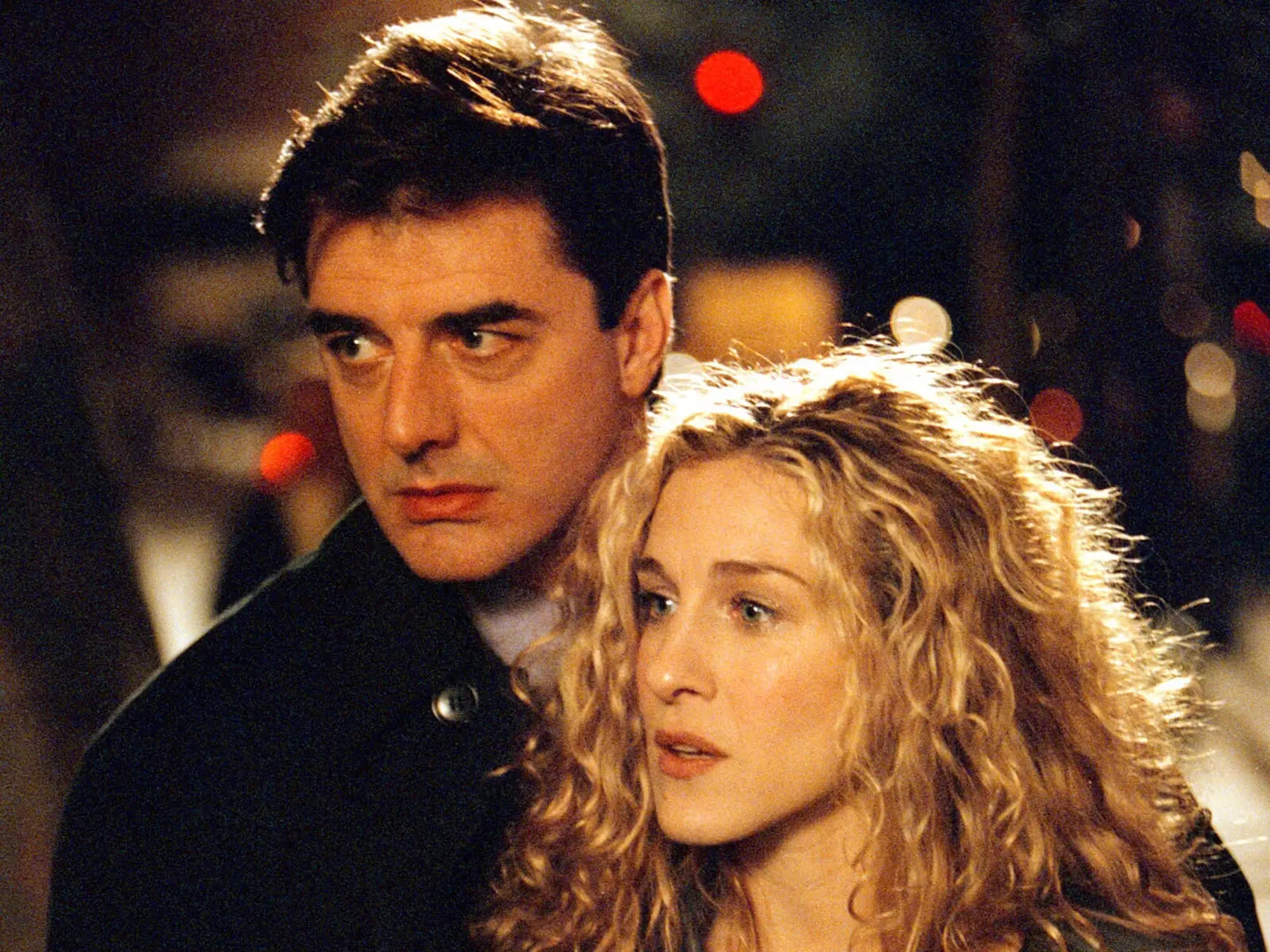
Picture: Carrie Bradshaw and Mr. Big on ‘Sex and the City’
One of the most painful aspects of heartbreak is not only losing the person. It is losing the dream life we built with them.
If you’ve ever watched Carrie Bradshaw unravel over Big, you’ve seen what people rarely name: she isn’t only grieving a man. She’s grieving the life her heart had already moved into—the future she rehearsed.
That’s why a heartbreak can feel bigger than the breakup. Because what collapses isn’t only “us.” It’s the direction your inner world was living toward.
You may have heard, “You’re overreacting. It was just a breakup.”No. A breakup is never “just” anything when your nervous system has attached to a future.
That imagined future becomes an internal compass. It quietly guides where you will live, how you will grow, who you will become together, what you will build, etc. Even if you never said those dreams out loud, they are deep in your subconscious mind. So when the relationship ends, you do not only lose a partner. You lose the future that was shaping your inner world.
This is why heartbreak can feel disorienting. It is not simply grief for a person—it is grief for a life that will not unfold the way you once envisioned. And if your mind is looping, you’re not “crazy.” You’re trying to stabilize. This is also why grief can feel physical and cognitively consuming—because it impacts the brain and nervous system, not just the heart. If you want a science-based perspective, the American Psychological Association explains how grief changes the brain here.
If your mind is looping, you’re not “crazy.” You’re trying to stabilize.
You might find yourself:
- replaying conversations
- craving one more message, one more explanation
- checking your phone even when you promised you wouldn’t
- remembering their “good version” and doubting your reality
- feeling okay, then collapsing again
Carrie does this too—searching for meaning, searching for certainty. The mind hates endings it didn’t choose, so it tries to solve them.
But here is the honest truth: No amount of analysis can turn an ending into the outcome you wanted.
What helps is quieter: name the real loss, so your system stops fighting reality. Below is the framework I use with my clients.
The Heartbreak Framework
Step 1: Name the future you lost
- I thought we would…
- I can’t accept…
- What hurts most is…
Step 2: Dream vs Reality
- What did this relationship symbolize for me?
- What was I hoping this would prove?
- Without the fantasy, what was the day-to-day reality?
Step 3: Let the “film” play differently
We often fall in love with potential. Bonding chemistry heightens idealization. Then clarity arrives—and the same scenes change meaning. Not because you were foolish. Because hope is powerful.
Step 4: Grieve, then return
Healing isn’t moving on. It’s returning. Choose one life-force act today: move, connect, restore, create.
Step 5: The Anagenesis question
When you can breathe again, ask:
- What part of me was trying to be healed here?
- What wound did this bond touch?
- What is this ending asking me to become conscious of?
This is where heartbreak becomes integration. This is where true Anagenesis begins.
If you want a calm, private place to begin—where you don’t have to perform strength—this is what I offer:
Book your 20-minute introductory session now.
A warm, focused space to name what you’re feeling, get clarity on the pattern, and leave with a next-step plan.
Sometimes the end of one chapter quietly becomes the beginning of a more conscious and aligned life.